
Probate Sale vs Trust Sale in California: Key Differences Homeowners Must Know
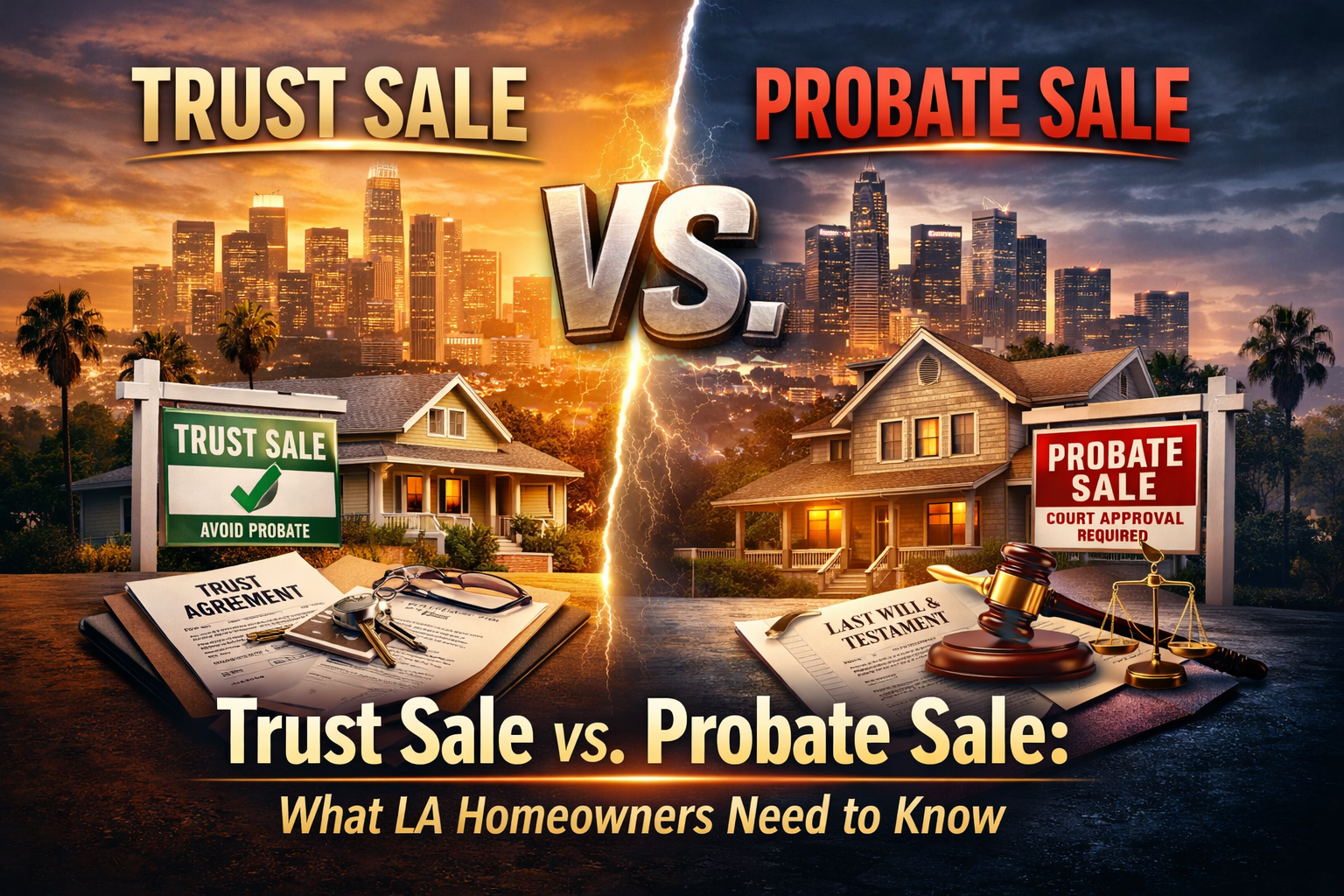
Probate Sale vs Trust Sale in California is one of the most important distinctions homeowners, heirs, and buyers must understand when selling inherited real estate. The type of sale determines how quickly the property can be sold, whether the court is involved, and how flexible the transaction will be.
In simple terms:
Probate sales require court supervision and usually take longer.
Trust sales happen privately and work like a normal real estate transaction.
If you're selling or inheriting property in Los Angeles County, understanding this difference can save months of time and significant legal complexity.
Quick Answer: Probate Sale vs Trust Sale
A probate sale occurs when a property owner dies without placing the home in a trust, requiring court oversight to sell the property. A trust sale happens when the property is held in a living trust, allowing the trustee to sell the home privately without court involvement.
What Is a Probate Sale in California?
A probate sale occurs when someone passes away and their property was not placed into a living trust. In this situation, the estate must go through probate court, which oversees the distribution and sale of assets.
The court appoints a personal representative (either an executor named in the will or a court-appointed administrator) to manage the estate and handle the sale of the property.
Because the court supervises the process, probate real estate transactions are typically slower and more structured than traditional home sales.
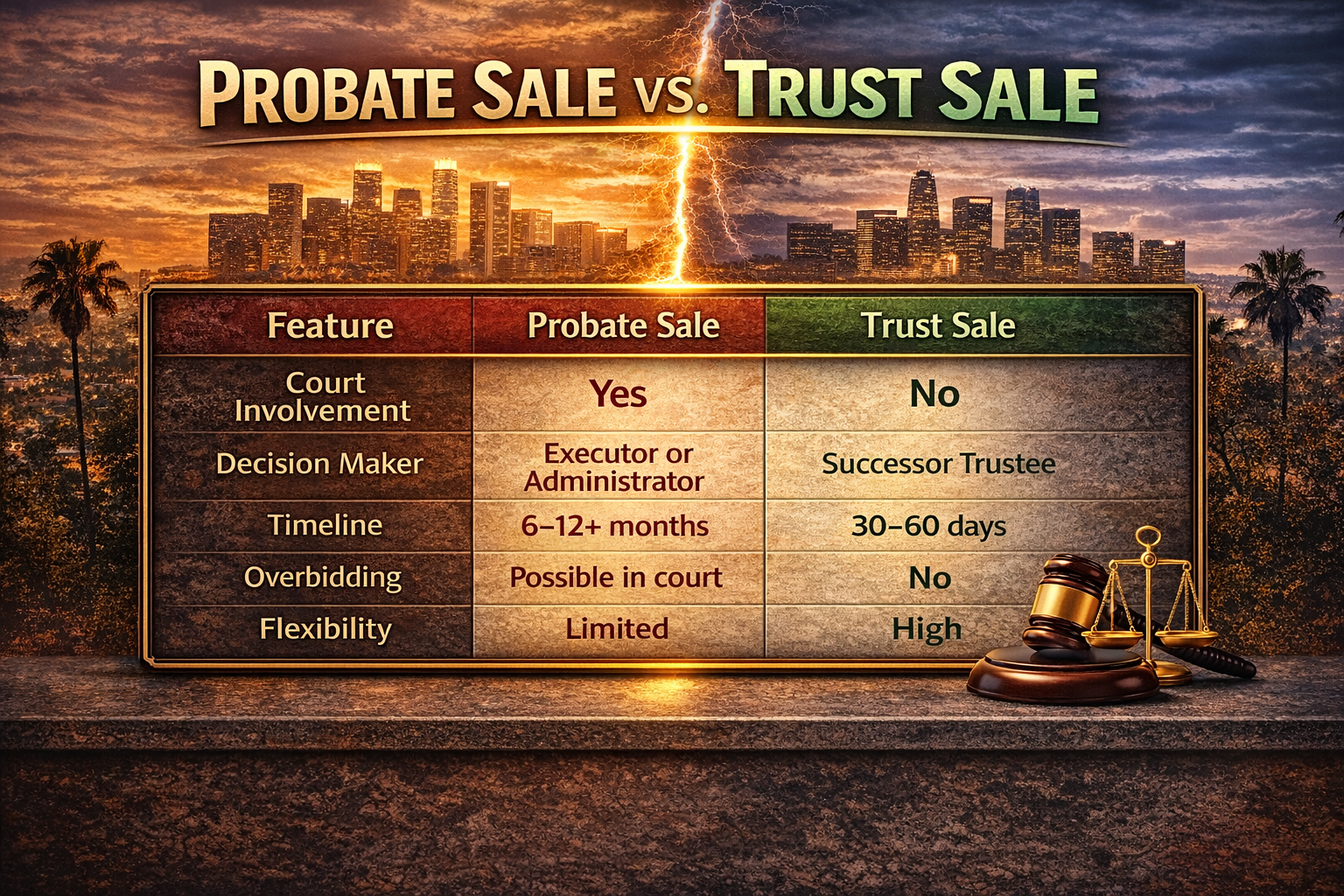
Key Characteristics of Probate Sales
Court approval is required
A judge may need to confirm the sale
Public overbidding can occur at a court hearing
Properties are usually sold as-is
Limited negotiation flexibility
Typical timeline: 6 to 12 months or longer
In competitive real estate markets like Los Angeles County, probate sales can attract investors looking for discounted properties due to their complexity.
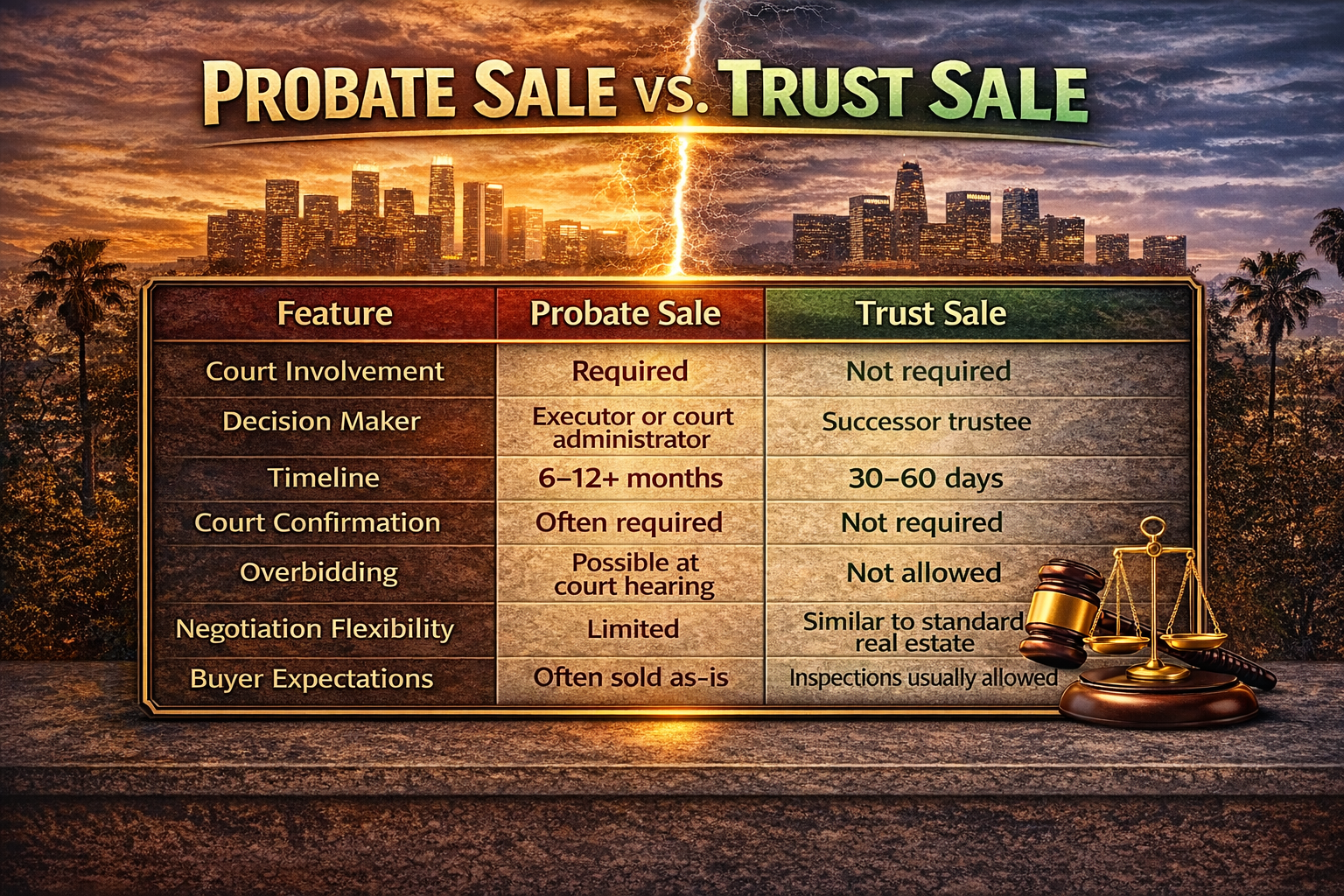
Probate Sale vs Trust Sale: Side-by-Side Comparison
Understanding the differences between these two processes can help families and buyers make better real estate decisions.
Why This Matters for Los Angeles County Homeowners
For homeowners and heirs in Los Angeles County, the difference between a probate sale and a trust sale can significantly impact the timeline, legal costs, and buyer interest.
Properties sold through probate often involve:
Longer delays
More paperwork
Court hearings
Reduced buyer flexibility
In contrast, trust sales typically attract more buyers and stronger offers because the process resembles a standard home sale.
Whether the property is located in Pasadena, Glendale, Burbank, or elsewhere in LA County, understanding the legal structure behind the property will determine how smoothly the sale can proceed.
How to Determine Whether a Property Requires Probate
The key factor is how the property was titled before the owner passed away.
A home will usually require probate if:
It was not placed in a living trust
There is no surviving joint owner
The estate exceeds certain thresholds
A trust sale applies if the property was already titled in a revocable living trust.
If you are unsure, reviewing the property's title documents or speaking with a professional can quickly clarify the situation.
FAQ: Probate vs Trust Sales in California
Which sale is faster, probate or trust sale?
Trust sales are typically faster because they do not require court approval. Many trust sales close within 30–60 days, while probate sales can take 6 months to over a year.
Can buyers bid higher in probate sales?
Yes. Probate sales sometimes allow court overbidding, where buyers can increase offers during the court confirmation hearing.
Are inspections allowed in probate sales?
Sometimes, but many probate homes are sold as-is, which can limit contingencies and repairs.
Why do many homeowners use living trusts?
Living trusts help families avoid probate, making it easier and faster to transfer or sell property after death.
Final Thoughts
Understanding the difference between probate sales and trust sales in California can make a major difference when selling inherited property.
Trust sales are typically faster and simpler
Probate sales involve court oversight and longer timelines
If you're managing an inherited property in Los Angeles County, knowing which process applies will help you avoid delays and make informed decisions about the sale.
If you need help navigating a probate or trust property sale, professional guidance can simplify the process and ensure everything moves forward smoothly.
